



 10 minutes to read
2026-08-19
Joseph Sison
Fixed-Time Trading Explained: How It Works and Where to Start


Fixed-time trading is a short-term trading strategy where you predict whether an asset’s price will go up or down at a specific point in the future. Keep reading to find out how fixed-time trading works, how it compares with other trading styles, what to look for in a platform, and how to approach it responsibly.
What Is Fixed-Time Trading?
At its core, fixed-time trading comes down to one question: where will the price be when the set deal time ends?
You choose an asset, pick a direction, set a deal time, and decide how much to trade. For example, if you expect EUR/USD to rise over the next five minutes, you could choose the upward direction and set a five-minute deal time. When the trade expires, the outcome depends on whether the price has moved as expected. In other words, getting the direction right isn’t enough — the move also needs to happen within your chosen timeframe.
Fixed-Time Trading vs. Other Trading Styles
The main difference is control over timing. With conventional spot trading, you choose when to close your position. Your final result depends on the price you bought and sold at and how much you traded. With fixed-time trading, you’re predicting whether the price will move as expected by a specific point in time rather than deciding when to close the trade.
Both styles carry market risk. With shorter timeframes, trades can be more sensitive to small price movements, leaving less time for the market to move as you expect.
What to Look For In a Fixed-Time Trading Platform
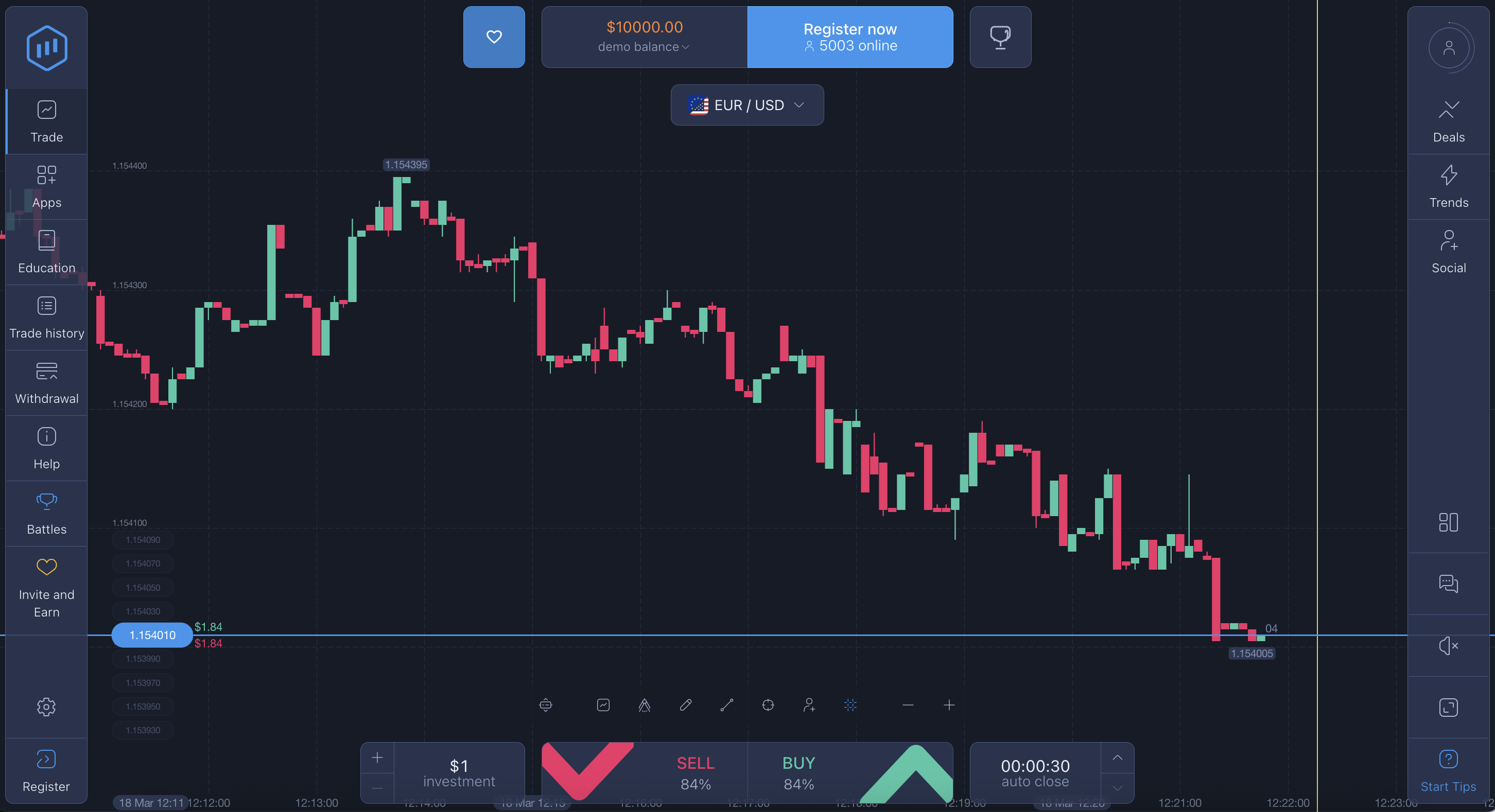
Transparency is especially important with short-term trades, since the trading conditions can directly affect the outcome. Make sure the platform clearly explains its deal times, prices, trade amounts, payouts, and what happens when a deal expires.
Other things to look at:
- Available assets and deal duration options
- Charting and analysis tools
- Whether a demo account is available
- Deposit and withdrawal methods and processing times
- Fees and other trading conditions
- Risk information and customer support
Payout Structure and Trade Duration Options
Before placing a fixed-time trade, you need to understand how potential returns are calculated. Deal duration should match your analysis. If your setup is based on a five-minute chart, choosing a much shorter expiry without reason may not leave enough time for the expected move to play out.
It’s also worth checking the withdrawal process before depositing. The minimum withdrawal on ExpertOption is $10, and you can withdraw using the original payment method available on your account. Withdrawals can take up to five business days to process, although it can take longer depending on the payment provider.
Is ExpertOption Good For Fixed-Time Trading?
ExpertOption has a relatively simple trading interface, with charts, asset selection and a range of deal-time settings suited to this style of trading. It also offers a demo account for you to practice without using real funds.
That simplicity can be useful if you’re still learning, but more experienced traders looking for more advanced analytical tools may find it limiting. The platform’s availability also depends on your location, so check if it operates in your country before signing up. That said, whether it’s suitable for you ultimately depends on your goals and trading style.
Building a Trading Strategy For Fixed-Time Trades
A real strategy is more than a hunch about where the market is headed. It's a consistent set of rules. At minimum, it helps to define:
- What to trade: for example, particular currency pairs or other assets you understand.
- When to trade: specific market sessions or conditions.
- What to look for: a price pattern, indicator setup, or signal combination.
- Which deal time to use: based on the timeframe of your setup.
- How much you can risk: with a set maximum per trade.
- When to stop: for example, after a daily loss limit or trade count.
Keeping the trading strategy simple can make it easier to test. Rather than changing it after every trade, use a consistent set of rules and keep track of how your strategy performs across several trades.
Common Trading Mistakes to Avoid With Short Expiry Trades
Short expiry periods can make it tempting to trade more, especially after a loss, which can quickly turn into overtrading. Another common mistake is changing the deal time without a clear reason. If your strategy is built around a specific timeframe, constantly switching between shorter and longer expiries makes it harder to tell whether the strategy is actually working.
Chasing losses is another risk. Increasing the amount of your next trade just to make back a previous loss doesn’t improve your chances of winning. It just puts more money at risk.
Finally, avoid overrelying on indicators and chart patterns. They can help you analyze market behaviour, but they can’t predict every future price movement.
Trading Tips For Managing Risk on Fixed-Time Trades
A few practical steps to minimize your risks include:
- Start with small trades, especially if you’re just learning.
- Set a daily or weekly trade or loss limit.
- Avoid increasing your trade amount after an unsuccessful trade.
- Test any strategy on a demo account first.
- Keep a trading journal and actually review it to learn from your past trades.
- Step away if you’re trading on emotion.
Getting Started With Fixed-Time Trading As a Beginner
Start by learning how the product works — how prices are shown, how to pick a direction, what deal times are available, and what happens at expiry. Don’t expect to make money right away, just take your time understanding the process. Read the platform's terms and risk disclosures before making a deposit.
If a demo account is available, use it to learn the interface and test a simple strategy. Stick to one or two assets rather than jumping between markets.
Keep a trading journal: track the asset, setup, direction, deal time and trade amount, result, and whether you followed your own rules. That gives you something real to look back on, instead of judging your strategy off a couple of trades.
Practicing Fixed-Time Trades and Deal Time Settings With a Free Demo Account
A free demo account can be especially useful when learning fixed-time trading because you can practise the mechanics without putting real money at risk.
With the ExpertOption free demo, you can try out different deal times. It's also a good way to test your strategy across several trades and assets. But treat it seriously. If you're constantly switching strategies or taking risks you wouldn't with real money, the practice won't teach you much. It's more useful to build a routine — pick a setup, choose a deal time, note the result, and review after a decent number of trades.
FAQs
Which Platform Is Best For Fixed-Time Trading?
There is no one platform that is best for everyone. Compare available assets, deal times, payout structure, charting tools, withdrawal conditions, and risk disclosures.
How Does Fixed-Time Trading Work on ExpertOption?
Select an asset, direction, trade amount, and deal time. When the period ends, the trade is evaluated per the platform's conditions, resulting in a profit or a loss.
How Do I Set the Deal Time On ExpertOption?
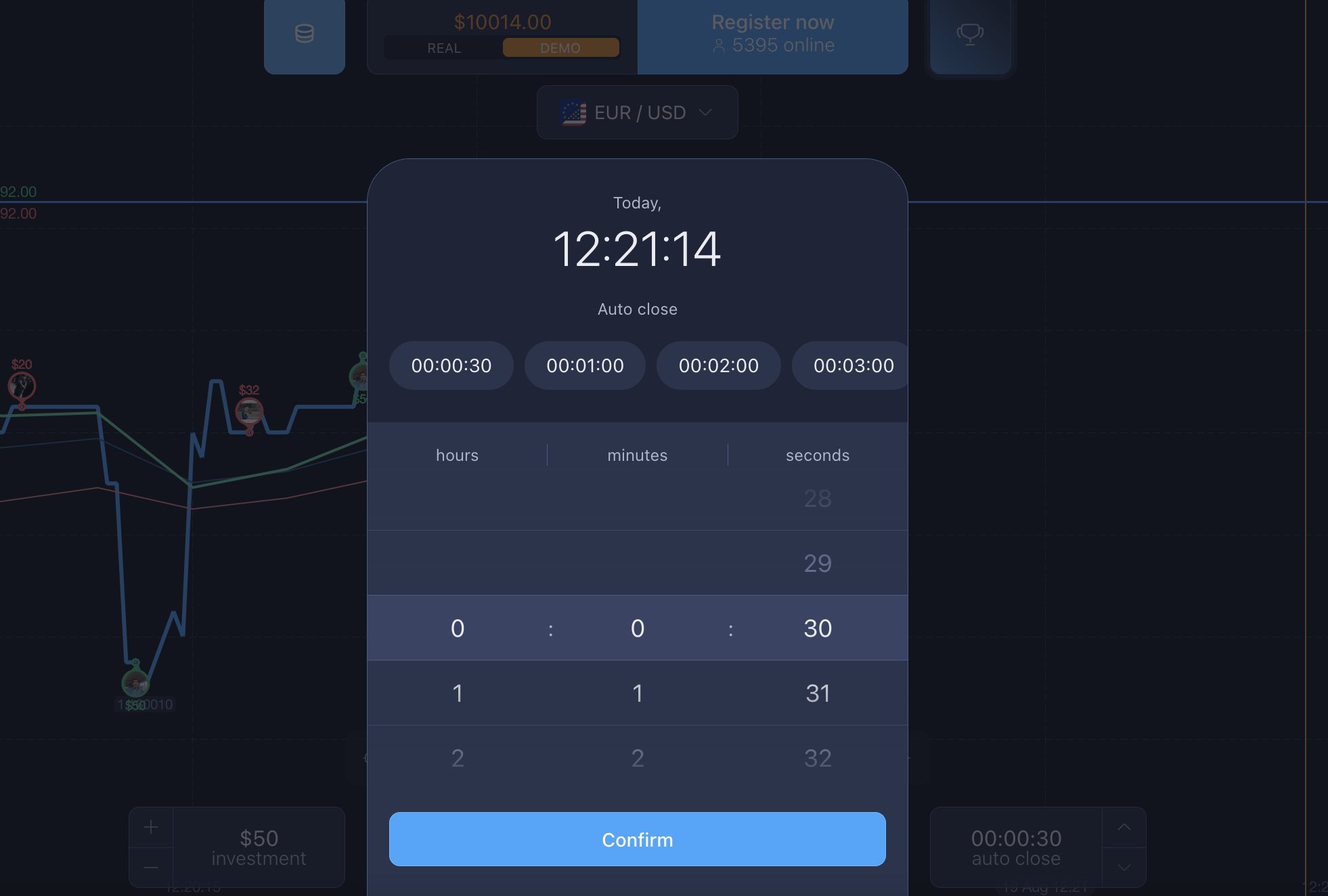
After choosing an asset, use the deal-time selector in the trading interface to pick from the available durations. Deal times can start as low as 30 seconds, with the option to customize duration in hours, minutes, and seconds.
How Do I Get Started With Fixed-Time Trading As a Beginner?
Learn the mechanics, read the platform's risk information, and practice on a demo account if you can. Stick to small trades, test a simple strategy, keep a trading journal, and set clear risk limits before committing real money.
Fixed-time trading carries real financial risk, especially with very short timeframes. Demo results don't guarantee the same outcomes with real money, and no strategy can promise profits.
To Sum Up
Fixed-time trading puts a lot of focus on timing because every trade has a set expiry. Before you start, make sure you understand the deal times, payouts, available assets, and trading conditions on the platform you’re considering.
There’s no way to remove the risks completely. Make sure you understand how the product works and set clear limits before deciding how much or how often to trade.
Latest Posts
Trading Education
Trading News
Trading Strategies
Promotions & Tournaments
Success Stories & Tips
Platform Updates
Global events, stocks, crypto, forex
ExpertOption Reviews: An Honest Overview and Tips from Traders
5 minutes to readExpertOption Withdrawal Policy: How Withdrawals Work and Why Balance Management Matters
5 minutes to readExpertOption Reviews: An Honest Overview and Tips from Traders
5 minutes to readExpertOption Withdrawal Policy: How Withdrawals Work and Why Balance Management Matters
5 minutes to read